Sunday, December 12, 2010

Movie Review: "Nutshimit: On the Land"

The small audience at the Cinematheque Theatre on Saturday night could be heard murmuring as they watched a caribou get shot, gutted, and then have its brain scooped out with a spoon. The only objection that the aboriginal girl on screen had with the gruesome process, however, was that her grandmother wouldn’t let her eat the eyeball.

“Nutshimit: On the Land” is a documentary that spotlights the Mushuau Innu people of Labrador, one of Canada’s few remaining semi-nomadic hunting bands. The documentary, directed by German filmmaker and photographer Sarah Sandring, focuses on an Innu grandmother as she teaches her grandchildren traditional stories and practices. The film was screened as part of the 9th Annual Winnipeg Aboriginal Film Festival, an event which showcases indigenous films from across the world.

The rustic culture that Sandring reveals in the film is a far cry from what many city dwellers are accustomed to. The audience’s squeamish reaction indicated that much. When one of the teenage boys in the film fixes his eyes on the black rectangle in his hand, it is hard to believe that he is holding a rock and not an iPhone. These cultural differences permeate the entire documentary, from the language – the film is told using subtitles, as the whole cast speaks in the traditional Innu tongue – to the names of the children, like Thunder and Sage.

And it is this distinct, ancient culture that “Nutshimit: On the Land” strives to maintain. The film, which was commissioned and partially funded by the Mushuau Innu Band Council, stresses the need to preserve the peoples’ traditions and language. At one point, the Innu grandmother, wrapped in a shawl and red headscarf, shuffles across the rocky terrain teaching the youth rituals like the hanging of the caribou antlers. Later, she shows them how to cure a toothache with a chokecherry. Her passion for the traditional lifestyle is obvious, and so is her desperation to see it carried on by a new generation. The film is bookended by the words “to the Innu youth,” a dedication which, after watching the film, feels more like a plea.

The simple beauty of the Innu people is matched by the film’s visual style. Sandring’s photography background is evident in the stunning shots of the snowy Labrador landscape drenched in the glow of a burning, northern sunset. It’s gorgeously unrestrained.

Actually, the only thing constrained about the film is its length. The boundless beauty of Labrador – and the long history of its people – is in stark contrast to the film’s 51 minute duration. The unembellished excerpts of aboriginal life are fascinating, and more detail would have been welcome.  In fact, when the film ended, the only complaint that rose from the audience was one man wishing that he could have seen how the Innu grandmother cooked the caribou brain. However, given that Sandring’s last documentary, “Burmese Nights,” was only 12 minutes long, he should be happy that the film’s as long as it is.

And what’s there to be unhappy about? Over its 51 minutes, the documentary manages to inform, entertain, and overwhelm. In one scene, the Innu elder tells her grandchildren not to forget what they’ve been taught. “Nutshimit: On the Land” may be rooted in stories from the past, but it leaves you thinking about the future.


Wednesday, December 1, 2010

Book Launch: Matrix of the Blended Family

On November 30, first-time author Gina DeBrincat launched her book Matrix of the Blended Family at Aqua Books. Although she may be new to the writing business, her experience as a mother, wife, and member of a family that she says is more "puréed" than blended has given her the insight necessary to tell a personalized story of life in a blended family.

The atmosphere at Aqua Books on the night of the launch was very much like DeBrincat's book itself - intimate, personal, and family oriented. The author was constantly surrounded by friends and family eager to show their support for her work. Even an old teacher of DeBrincat's showed up. There was love in the room.

DeBrincat's book addresses the issues that a blended family might face, and provides techniques that can help the family survive. DeBrincat says the idea for the book came after much research and reading about family life. She noticed that there was a void when it came to the accurate representation of the blended family and its struggles. Given her own experiences, this was a void that she felt she could fill.

The book is structured in sections, using the metaphor of the changing seasons to represent the different stages in the life of a blended family. The book begins in autumn (the death of the traditional family and the ideals that come with it), and moves through the seasons, ending in summer with the portrayal of a successful blended family.

DeBrincat says that the purpose of the book - and her purpose as a writer - is to help people by creating a connection with them. This attitude is carried into other aspects of her life as well, such as her music. She and her husband play African influenced music, further adding to her cultural diversity.

The first-time author is already working on another book. It revolves around the relationships between mothers and daughter. DeBrincat is co-authoring the book with another writer. The other writer will be writing the daughters portion, while DeBrincat is working on the mother's perspective.

I wasn't able to stay for DeBrincat's reading, but when I left the wine and laughter were still in ample supply. Good signs for the success of any reading. Or anything at all for that matter.
Low-resolution photograph of the launch at Aqua Books. Thank goodness I remembered to take this or I might have had to forge something in Microsoft paint.

Sunday, November 28, 2010

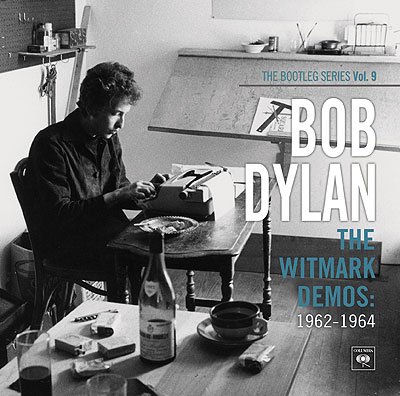
Raising Musical Awareness (?): The Witmark Demos

“Come you ladies and you gentlemen and listen to my song. I’ll sing it to you right, but you might think it’s wrong…”

During the second coming of the personality profile assignment I was reminded by a classmate of a certain musical passion of mine: Bob Dylan. I’ve written about a number of other artists and albums (the number 4 to be exact), but not Dylan, and jeez louise that’s just not right. He is this blog’s namesake - as well as this man’s namesake - after all. He’s earned himself a little recognition. So, to right a wrong, here is a quick look at Dylan’s latest release, The Witmark Demos: 1962 – 1964.


The Witmark Demos are volume 9 in the ongoing Bob Dylan bootleg releases – a series of compilations which began in the early 90’s and have been neatly compiling Dylan’s outtakes and live performances. The album is comprised of 47 tracks and stretches over two discs.

The album is rough, sparse, and intimate, pulling you through your headphones or speakers and placing you in the room with Dylan. That is the album’s strongest trait, and its greatest allure.

When Dylan says “Jesus Christ, I can’t get it. I lost the verses,” at the end of the first track, “Man on the Street (Fragment),” it is as if the words are directed towards the listener – there is no response from anyone who was with Dylan, no acknowledgment. These simple mistakes and musings – although I’m sure they’ll become tiresome after multiple listens – provide Dylan with a vulnerability that is missing on a lot of his albums (besides, maybe, Another Side of Bob Dylan). The same can be said for the rhythmic slap of Dylan’s foot against the floor on the previously unreleased “Ballad for a Friend.” An honest sound that would most likely have been eliminated from a studio album.

The Witmark Demos contains 15 previously unreleased songs, the other 32 being alternate/early takes of songs that have appeared on Dylan’s albums or other volumes of the bootleg series. The new tracks are uniformly strong, with the somber “Guess I’m Doing Fine” being a standout. The alternate versions of classics, however, are revelatory. Hearing “Mr. Tambourine Man” slowed down to a dirge, accompanied by only a piano is something I could have lived without. The takes of “Tomorrow is a Long Time” and “Mama, You Been on My Mind,” on the other hand, glimmer with a stuffy sophistication.

Essentially, the album’s target market is Bob Dylan fans. If you’re familiar with these songs, the early versions are like watching God make Genesis and all that good stuff happen. If you’re not, then this might not be the best place to start. But whatever, hearing these songs now its easy to see why they found him some famous fans.

Listening recommendations: After: The Freewheelin’ Bob Dylan and The Times They Are A-Changin’. Before: Finding a new musical deity.
 

Saturday, November 20, 2010

Review - Short Story: "Tree Line, Kansas, 1934"

"Tree Line, Kansas, 1934" is a short story by David Means. The story revolves around two law enforcers - an aged FBI agent, Lee, and his young, upstart partner Barnes - and their five day stakeout of a farm in Kansas. They are waiting for Carson, a dangerous fugitive who has spread fear and lead across the country in a string of heists.

Means' story uses simple language and imagery. The whole thing vibrates with a dusty elegance that is fitting of the story's setting. Lines such as, “look out at a lake on a clean, quiet summer day while the wind riffled the far side and a single boat oared gently, dragging a fishing line,” give the story an earthy, minimalistic feel. It's beautiful in its sparseness.

This barren feeling is a reoccurring theme in the story. One example is Means' decision to fuse the dialogue into the natural telling of the narrative - there are no quotation marks, no new paragraphs. The old voice of Lee cuts through the fat, evocative paragraphs. It's blended into the story, sandwiched between descriptive sentences and complex musings. In fact, the dialogue, once again, resembles the title setting. The voices are surrounded by an expanse of words, just as landlocked Kansas, at the center of America, is surrounded by land.

The story is also streaked with a underlying sense of mysticism and magic. This isn’t a world of rules, it’s one of superstition. Lee relies on the gusting of the wind, gut feelings, and the formation of “a cloud that seems to refuse to achieve its full growth” to judge the state of things. Much of the story is told within the mind of Lee. The authour reveals Lee's mental ramblings and reminisces - the strange thought dreams that we all have, but fail to catalogue. It is these thoughts that form the bulk of the narrative and define Means' surreal style.

This style, and the superstition, often manifests itself as a kind of spirituality. Throughout the story there is a struggle between this spirituality (the land and nature) and brutality (the purpose of their mission). As Lee puts it, they “were preparing for the imminent arrival of God, or gun, his gut told him, in those exact words.” In the end, it is a highly violent combination of these two things that brings the stakeout to its close. Bullets carried on a breath of wind, blood dripping on the wild, overgrown weeds. It is as intensely destructive as it is beautiful.

Ultimately, "Tree Line, Kansas, 1934" is a story that is bursting with beauty and pain, just like the land in which it is set. It burns as slow as the cigarette upon which Lee drags during his retreats beyond the tree line. And at its close you are left feeling the same way. Light-headed and a little dirty.


For an alternate (and more in-depth) take on the story, check out Paul Lagimodiere's blog http://itsalovingbefuddlement.blogspot.com/2010/11/short-story-review-blog-assignment-1.html


David Means is a writer from Nyack, New York.

"Tree Line, Kansas, 1934" can be found in his short story collection The Spot, which was released in 2010.

The story appeared in the October 25, 2010 issue of The New Yorker.